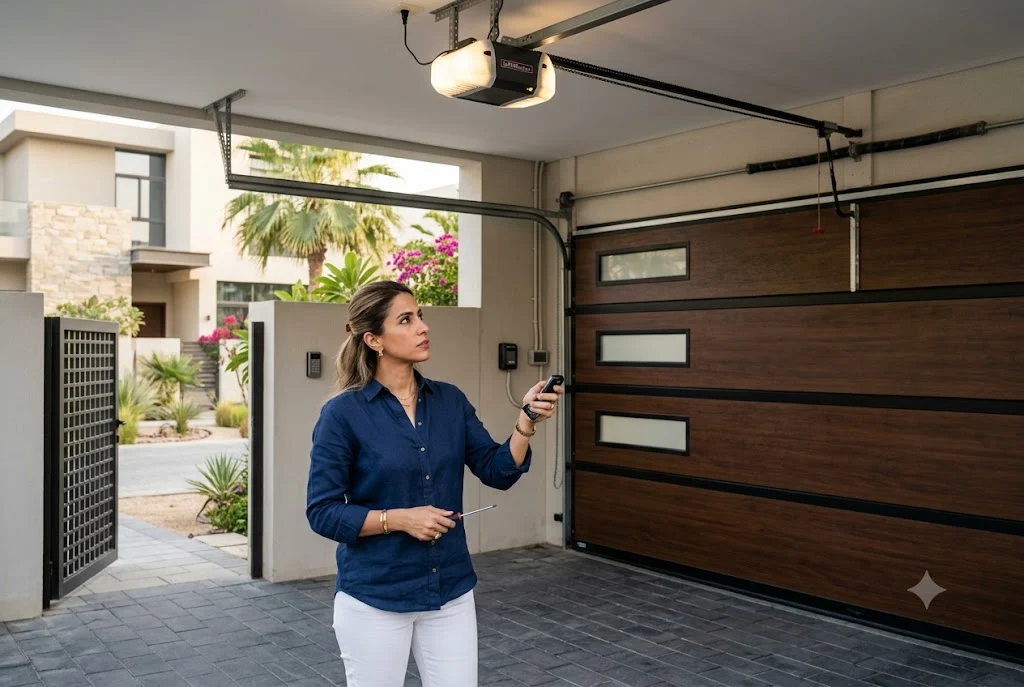
A garage door remote not working can be frustrating, especially when you rely on your garage for daily access to your home or business. Whether the remote suddenly stops responding, works intermittently, or fails after battery replacement, identifying the underlying cause is the first step toward restoring normal operation.
Modern garage door systems depend on reliable communication between the remote and the opener. When that connection is interrupted, the door may refuse to open or close using the handheld transmitter. Fortunately, many remote-related problems can be diagnosed and resolved without replacing the entire garage door system.
This guide explains the most common reasons a garage door remote stops working, how to troubleshoot the issue, and when professional repair or replacement may be necessary.
Why Is My Garage Door Remote Not Working?
Several factors can cause a garage door remote not working problem. Some issues are simple, such as a dead battery, while others may involve the opener, receiver, or electrical system.
Common causes include:
- Weak or dead batteries
- Remote programming failure
- Signal interference
- Damaged remote buttons
- Faulty receiver unit
- Antenna problems
- Electrical issues affecting the opener
- Memory loss after power interruptions
Understanding these possibilities can help narrow down the source of the problem more quickly.
Check the Remote Battery First
One of the most common reasons a garage door remote stopped working is a weak battery.
Even if the indicator light appears functional, the battery may not provide sufficient power to transmit a signal to the opener.
Battery Inspection Tips
- Install a fresh battery from a reputable brand
- Verify correct battery orientation
- Check battery contacts for corrosion
- Clean contacts if necessary
- Test the remote again after replacement
Battery replacement is often the fastest and least expensive troubleshooting step.
Confirm the Garage Door Opener Has Power
Sometimes the issue is not the remote at all.
If the opener loses power, the garage door opener not working with remote situation may appear to be a remote failure even though the actual problem lies with the motor unit.
Check the following:
- Power outlet functionality
- Circuit breakers
- Power cords
- Opener indicator lights
- Wall-mounted control panel operation
If the wall button does not operate the garage door either, the opener may require inspection.
Remote Programming May Have Been Lost
Power outages, electrical surges, and system resets can occasionally erase stored remote settings.
When this happens, the opener no longer recognizes the remote signal.
In many cases, reprogramming restores functionality.
Our detailed guide on how to program garage door remote explains the complete pairing process for most garage door systems.
Inspect the Garage Door Opener Antenna
The opener’s antenna receives signals from the remote.
If the antenna becomes damaged, disconnected, bent, or obstructed, the garage door remote control not working issue may occur even when the remote itself is functioning properly.
Look for:
- Physical damage
- Loose connections
- Obstructions around the antenna
- Excessive dust accumulation
Maintaining a clear signal path improves communication between the remote and the opener.
Signal Interference Can Disrupt Operation
Wireless devices can sometimes interfere with garage door remote signals.
Common sources include:
- Wi-Fi equipment
- Security systems
- LED lighting systems
- Radio transmitters
- Nearby industrial equipment
If your remote works only when close to the garage door, signal interference may be affecting performance.
Remote Buttons May Be Worn Out
After years of use, internal button contacts can wear down.
This often causes intermittent operation or complete failure.
Signs of button wear include:
- Buttons sticking in place
- Delayed response
- Inconsistent operation
- Visible physical damage
In these cases, garage door remote repair may be possible, although replacement is often the more practical solution.
Garage Door Remote Sensor and Receiver Problems
Many homeowners search for issues related to a garage door remote sensor. In reality, the remote communicates with a receiver located inside the opener system.
If the receiver becomes damaged, the opener may stop recognizing remote commands.
Potential receiver issues include:
- Electrical damage
- Water exposure
- Circuit board failure
- Memory corruption
- Antenna malfunction
Professional testing may be necessary to verify receiver performance.
How to Fix Garage Door Remote Problems
If you are wondering how to fix garage door remote issues, begin with the simplest solutions before considering replacement.
Step 1: Replace Batteries
Install fresh batteries and test operation.
Step 2: Reprogram the Remote
Reconnect the remote to the opener system.
Step 3: Check Opener Power
Verify that the opener is receiving electricity.
Step 4: Inspect the Antenna
Ensure the receiver antenna is visible and undamaged.
Step 5: Test Distance
Evaluate remote performance at various distances.
Step 6: Remove Potential Interference
Temporarily disable nearby wireless devices when possible.
These troubleshooting steps resolve many common remote issues.
When a Garage Door Controller Replacement Is Needed
Sometimes repair is no longer practical.
A garage door controller replacement may be required if:
- The remote is physically damaged
- The receiver has failed
- The system uses obsolete technology
- Replacement parts are unavailable
- Security features are outdated
Modern remotes often provide improved range, security, and reliability compared to older models.
Brand-Specific Remote Issues
Different manufacturers use different communication technologies.
Genie Remotes
Compatibility and programming issues can occasionally affect Genie systems. Our guide on genie garage door opener remote explains remote selection and compatibility considerations.
LiftMaster Remotes
LiftMaster remotes often require specific programming procedures. Homeowners can learn more in our dedicated guide on how to program liftmaster garage door remote.
Chamberlain Remotes
Chamberlain systems may require model-specific setup procedures. We cover these details in our guide on how to program chamberlain garage door remote.
Preventing Future Remote Failures
Regular maintenance can help reduce the likelihood of future problems.
- Replace batteries proactively
- Protect remotes from moisture
- Avoid dropping the device
- Keep spare remotes available
- Test operation regularly
- Inspect opener components annually
Routine maintenance often extends the lifespan of both the remote and the garage door opener system.
When to Call a Professional
If troubleshooting does not resolve the issue, professional diagnosis may be necessary.
Contact a qualified garage door technician if:
- Multiple remotes fail simultaneously
- The opener does not respond to wall controls
- The receiver appears damaged
- Electrical issues are suspected
- The garage door behaves unpredictably
A professional inspection can identify underlying problems that may not be visible during basic troubleshooting.
Final Thoughts
A garage door remote not working problem is often caused by batteries, programming issues, signal interference, or receiver-related faults. Fortunately, many of these issues can be resolved through systematic troubleshooting and proper maintenance.
By checking the simplest causes first and addressing potential compatibility or hardware concerns, homeowners can restore dependable garage access and avoid unnecessary repairs or replacements.
