
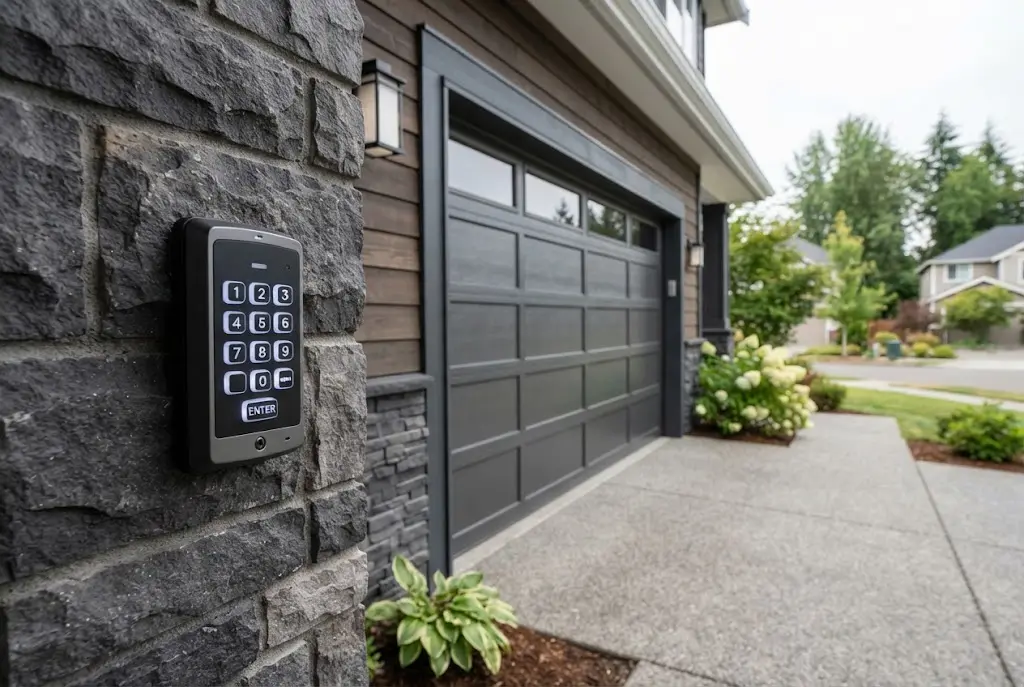
A garage door keypad provides a convenient way to open and close a garage without carrying a traditional remote control or using a physical key. By entering a programmed PIN on an exterior keypad, homeowners can access a compatible garage door opener from outside the garage. This makes keypads particularly useful for families, children, guests, service providers, and anyone who wants convenient access without keeping a remote in hand.
Garage door keypads are available in wired and wireless configurations, with different programming methods, security features, designs, and compatibility requirements. Before installing or replacing one, it is important to understand how these devices work and whether the keypad is compatible with your garage door opener.
What Is a Garage Door Keypad?
A garage door keypad is an access-control device mounted outside or near a garage. Instead of pressing a button on a handheld remote, the user enters a personal identification number on the keypad to activate the garage door opener.
The keypad communicates with the opener using the technology supported by the particular system. Modern wireless models can provide keyless entry without requiring a physical cable between the exterior keypad and the opener.
For homeowners who frequently use remote controls, a keypad can complement existing garage door remotes rather than necessarily replacing them. Each access method can serve a different purpose.
How Does a Garage Door Keypad Work?
A typical wireless keypad stores a programmed PIN and communicates with the compatible garage door opener when the correct code is entered. Depending on the manufacturer and model, the user may enter the PIN and then press a designated button to send the opening command.
The opener receives the wireless signal and activates the garage door system when the keypad and opener recognize the command.
Because garage door opener systems use different technologies, a keypad is not automatically compatible with every opener. Compatibility should always be checked before purchasing a new unit.
Types of Garage Door Keypads
Garage door keypads are available in several configurations. The right choice depends on the existing opener, installation requirements, security preferences, and how the garage is used.
Wireless Garage Door Keypad
A wireless garage door keypad communicates with the opener without a traditional wired connection between the keypad and the opener. This can simplify installation and gives homeowners more flexibility when selecting the mounting location.
Wireless models are especially useful for retrofit installations where running new wiring would be inconvenient.
Wired Garage Door Keypad
Wired keypads use a physical connection to the garage door opener or control system. They can be appropriate for systems designed specifically for wired access controls, although installation may require more planning than a wireless unit.
Universal Garage Door Keypad
A universal keypad is designed to work with selected garage door opener systems from multiple manufacturers. However, the word “universal” does not mean that every opener is supported.
If you are considering this type of product, review the dedicated universal garage door keypad guide for more information about compatibility and wireless options.
Benefits of Using a Garage Keypad
A keypad adds another access method to a garage door system and can solve several everyday convenience problems.
- Keyless access: Users can enter a PIN instead of carrying a remote.
- Convenient family access: Household members can use the same programmed system.
- Useful for guests: A keypad can provide access without handing over a physical remote.
- Backup access: It can provide another way to enter the garage if a remote is unavailable.
- Reduced remote dependence: Users do not need to keep a handheld transmitter with them every time they enter.
- Exterior installation: A suitable location near the garage can make access straightforward.
These advantages make a keypad particularly useful for households where several people regularly need garage access.
Garage Door Keypad vs. Garage Door Remote
A keypad and a remote perform a similar basic function, but they provide access in different ways. A remote generally requires the user to carry a transmitter and press a button. A keypad requires the user to enter a PIN on the exterior device.
A remote is often convenient when entering the garage from a vehicle. A keypad can be useful when someone arrives without a remote or needs temporary access.
Neither system automatically replaces the other. Many garage door systems can support multiple access methods, provided the devices are compatible with the opener.
How to Choose a Garage Door Keypad
Before buying a keypad, check the garage door opener model and the manufacturer’s compatibility information. This is one of the most important steps because an incompatible keypad may not communicate with the opener.
Consider the following factors:
Compatibility
Start with the garage door opener. Identify its manufacturer and model, then check which keypads are supported.
Wireless or Wired Design
Determine whether your opener supports a wireless keypad or requires a wired access-control device. Wireless installation can be simpler, while wired systems may be appropriate for specific opener configurations.
PIN Management
Consider how the keypad handles PIN programming and whether you need the ability to change the code periodically.
Weather Resistance
Because exterior keypads are exposed to changing weather conditions, choose a model designed for outdoor use. A suitable enclosure can help protect the electronics from moisture, dust, and temperature changes.
Lighting and Visibility
Some keypads include illuminated buttons or displays that make nighttime operation easier. This can be useful when the keypad is installed in a poorly lit area.
How to Install a Garage Door Keypad
The exact installation procedure varies by manufacturer and model. However, the general process usually involves selecting a suitable mounting position, installing the keypad, and programming it to communicate with the opener.
Choose the Installation Location
Mount the keypad in a convenient location that is accessible from outside the garage. It should be high enough to discourage accidental contact while remaining comfortable for household members to use.
Secure the Keypad
Use the mounting hardware supplied with the keypad and follow the manufacturer’s instructions. Outdoor mounting surfaces should provide adequate support and should not expose the device unnecessarily to water.
Install or Check the Batteries
Wireless keypads commonly rely on batteries. Install the specified battery type according to the manufacturer’s instructions and confirm the polarity before closing the battery compartment.
If your garage access system also relies heavily on handheld remotes, keeping track of their battery condition can prevent avoidable access problems. The garage door remote battery guide covers basic battery maintenance for remote controls.
Program the Keypad
Enter the required programming sequence for your specific keypad and opener. The process can involve pressing a Learn button on the opener and then entering a PIN on the keypad.
Because programming procedures vary, use the instructions supplied with your exact model rather than relying on a generic sequence.
Test the System
After programming, test the keypad from outside the garage. Enter the PIN exactly as instructed and confirm that the opener responds correctly.
How to Program a Garage Door Keypad
Programming a keypad usually establishes communication between the keypad and garage door opener. The procedure differs by manufacturer, but many systems use a learning or programming function on the opener.
Before starting, keep the keypad instructions available and identify the opener’s Learn or programming button if your model uses one.
Once programming is complete, test the PIN several times. If the keypad does not activate the opener, verify that the programming sequence was followed correctly and that the keypad is compatible with the opener.
Programming a keypad should not be confused with programming a handheld remote. If you are working with a remote instead, see the site’s guide on how to program a garage door remote.
Garage Door Keypad Replacement
A keypad may eventually need replacement because of physical damage, failed electronics, worn buttons, battery-related problems, or compatibility changes after an opener upgrade.
Before replacing it, determine whether the problem is actually caused by the keypad. Check the battery, inspect the buttons, verify the PIN, and confirm that the opener is operating normally.
If the keypad is damaged or no longer supported by the opener, replacing it with a compatible model may be the most practical solution.
Common Garage Door Keypad Problems
Like any electronic access device, a keypad can occasionally stop working correctly. Several common problems can be checked before replacing the unit.
Keypad Does Not Respond
If nothing happens when you press the keypad buttons, check the battery if the unit is wireless. Also inspect the keypad for visible damage or signs of moisture exposure.
Correct PIN Does Not Open the Door
If the keypad accepts button presses but the garage door does not respond, check whether the keypad is still programmed to the opener. A lost programming connection or an incorrect code can prevent activation.
Keypad Works Intermittently
Intermittent operation can result from a weak battery, damaged buttons, poor electrical contact, signal problems, or an issue with the opener itself.
Keypad Stops Working After Opener Replacement
A new garage door opener may not support the existing keypad. Compatibility should be checked whenever an opener is replaced or upgraded.
How to Keep a Garage Door Keypad Reliable
Regular care can help extend the useful life of an exterior keypad. Keep the surface reasonably clean and avoid spraying water or cleaning products directly into the buttons or housing.
Check the battery when the keypad becomes less responsive. Also inspect the mounting hardware periodically to ensure the unit remains secure.
For the wider garage door system, routine garage door maintenance can help identify problems with the opener, door hardware, springs, and other components before they become larger issues.
Is a Garage Door Keypad Secure?
A keypad can provide controlled keyless access, but security depends on the technology and configuration of the specific system. Users should keep their PIN confidential and avoid using easily guessed combinations.
If a code has been shared with someone who should no longer have access, change it when the keypad and opener support that function. Households should also follow the manufacturer’s recommendations for managing access codes.
A keypad should be considered one part of an overall garage security approach rather than the only security measure. The site’s guide on how to secure a garage door provides additional considerations for protecting garage access.
When Should You Replace a Garage Door Keypad?
Replacement may be appropriate when the keypad has suffered physical damage, repeatedly fails despite a fresh battery and correct programming, or is incompatible with the current garage door opener.
Before purchasing a replacement, identify the opener model and compare the supported keypad options. A universal model may provide broader compatibility, but its supported opener list should still be checked carefully.
For homeowners specifically considering a universal model, the universal garage door keypad guide can help explain the differences between universal and manufacturer-specific options.
Garage Door Keypad and Your Overall Access System
A keypad is most useful when it is considered as part of the complete garage door access system. The opener, remote controls, keypad, sensors, and mechanical door components all need to work together properly.
If the keypad works but the garage door itself has a mechanical problem, replacing the keypad will not solve the underlying issue. Similarly, a keypad that stops responding may be affected by an opener or programming problem rather than a failed keypad.
Understanding how these components interact makes troubleshooting more efficient and helps avoid replacing parts unnecessarily.
Related Garage Door Keypad and Remote Resources
If you are researching a garage door keypad or planning to add keyless access, these related resources can help you explore compatible options and connected topics:
- universal garage door keypad
- wireless garage door keypad
- garage door opener guide
- garage door opener remote compatibility
- garage door remotes
- garage door remote guide
- garage door maintenance
- garage door security
- garage door components
Final Thoughts
A garage door keypad offers convenient keyless access and can be a valuable addition to a residential garage door system. Wireless and wired models are available, while universal options can provide compatibility across selected opener brands.
The most important step before purchasing or installing a keypad is confirming compatibility with the existing garage door opener. Proper programming, a suitable installation location, reliable batteries, and sensible PIN management can all contribute to dependable operation.
For specific installation and programming procedures, always follow the instructions for the exact keypad and opener models being used. When the keypad is part of a larger garage door problem, checking the opener and other components can help identify the real cause instead of replacing the wrong part.
For manufacturer-specific technical information, consult the official Chamberlain support resources when working with a compatible Chamberlain system.
