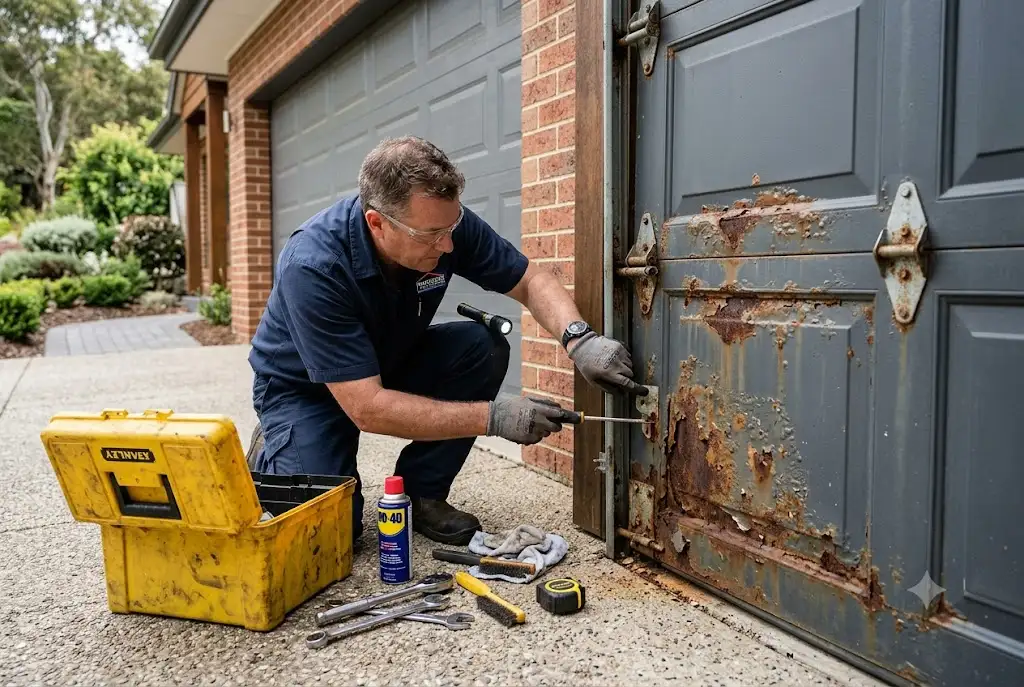
Garage door rust is a common problem that affects both the appearance and performance of garage doors. While rust may initially appear as a minor cosmetic issue, it can gradually weaken metal surfaces, damage components, and reduce the lifespan of the entire garage door system if left untreated.
Whether your garage door is made from steel or contains metal hardware, exposure to moisture, humidity, dirt, and environmental contaminants can lead to corrosion over time. Understanding what causes garage door rust and how to prevent it can help homeowners avoid expensive repairs and maintain the value of their property.
Regular inspections, proper cleaning, and the use of garage door spray lubricant are among the most effective ways to protect metal components from premature deterioration.
What Causes Garage Door Rust?
Rust develops when metal is exposed to oxygen and moisture over an extended period. This natural chemical reaction gradually breaks down the metal surface, leading to corrosion.
Several factors can accelerate rust formation on garage doors and their components.
Moisture Exposure
Rain, humidity, condensation, and water accumulation are among the leading causes of rust development.
Damaged Paint or Protective Coatings
Scratches, chips, and worn finishes expose bare metal, allowing corrosion to begin.
Poor Maintenance
Dust, dirt, and debris can trap moisture against metal surfaces and contribute to long-term deterioration.
Coastal Environments
Properties located near the sea often experience accelerated corrosion due to salt exposure.
Common Areas Where Garage Door Rust Appears
Although the door panels often show the most visible signs of rust, corrosion can develop throughout the garage door system.
Common problem areas include:
- Steel door panels
- Garage door rails
- Hinges
- Rollers
- Springs
- Cables
- Fasteners and brackets
- Bottom door edges
Routine inspections help identify these issues before they become severe.
Why Garage Door Rust Should Not Be Ignored
Many homeowners postpone rust repairs because the damage initially appears minor. However, corrosion tends to spread over time and may eventually compromise structural integrity.
Potential consequences include:
- Reduced door lifespan
- Weakened metal components
- Operational issues
- Increased repair costs
- Safety concerns
- Reduced curb appeal
Addressing rust early is usually far more affordable than replacing damaged parts later.
How to Remove Garage Door Rust
Inspect the Affected Area
Begin by identifying all visible signs of corrosion and determining whether the damage is superficial or structural.
Clean the Surface
Remove dirt, grease, and loose debris before beginning rust treatment.
Remove Rust Deposits
Light rust can often be removed using appropriate abrasive tools and cleaning methods designed for metal surfaces.
Apply Rust Treatment
Specialized rust converters and primers can help stop corrosion from spreading.
Repaint the Surface
Applying a protective coating helps seal exposed metal and reduce future corrosion risks.
The Role of Garage Door Spray Lubricant
Garage door spray lubricant is an important maintenance product that helps protect moving metal parts from wear and corrosion.
Proper lubrication provides several benefits:
- Reduces friction
- Protects metal surfaces
- Improves operational smoothness
- Reduces noise
- Helps prevent moisture-related corrosion
- Extends component lifespan
While lubrication does not eliminate rust entirely, it plays an important role in preventive maintenance.
Which Components Should Be Lubricated?
Not all garage door parts require lubrication, but several key components benefit from regular treatment.
Common lubrication points include:
- Rollers
- Hinges
- Springs
- Bearings
- Pivot points
Many of these parts are essential garage door components that directly influence overall system performance.
Preventing Garage Door Rust
Preventive maintenance is the most effective strategy for avoiding corrosion-related problems.
Keep the Door Clean
Regular cleaning removes contaminants that may contribute to rust formation.
Inspect for Paint Damage
Address scratches and chipped coatings before corrosion develops.
Lubricate Moving Parts
Applying garage door spray lubricant helps protect exposed metal surfaces.
Check Weather Protection Systems
A properly functioning garage door weather seal helps reduce moisture intrusion and environmental exposure.
Perform Regular Inspections
Routine inspections allow homeowners to identify early signs of corrosion before significant damage occurs.
Can Rust Damage Garage Door Cables?
Yes. Rust can weaken garage door cables and reduce their load-bearing capacity. Corroded cables are more likely to fray or fail, creating potential safety hazards.
If cable corrosion is discovered, homeowners should consider professional evaluation and, when necessary, garage door cable replacement to maintain safe operation.
When Should Rusted Components Be Replaced?
Surface rust can often be treated successfully. However, replacement may become necessary if corrosion has caused:
- Structural weakening
- Deep pitting
- Metal deformation
- Operational problems
- Safety concerns
A qualified technician can determine whether repair or replacement is the most appropriate solution.
Professional Maintenance Benefits
Professional garage door inspections help identify hidden corrosion that may not be immediately visible. Technicians can evaluate springs, cables, rails, and hardware while recommending appropriate maintenance strategies.
Preventive servicing often helps homeowners avoid larger repair expenses and unexpected system failures.
Conclusion
Garage door rust may start as a minor cosmetic issue, but it can quickly develop into a more serious maintenance concern if ignored. Regular cleaning, inspections, protective coatings, and the use of garage door spray lubricant all play important roles in preventing corrosion. By addressing rust early and maintaining key components properly, homeowners can extend the lifespan of their garage door system while preserving safety, performance, and appearance.
For additional guidance on garage door maintenance and safety standards, homeowners can consult the Door & Access Systems Manufacturers Association (DASMA).
