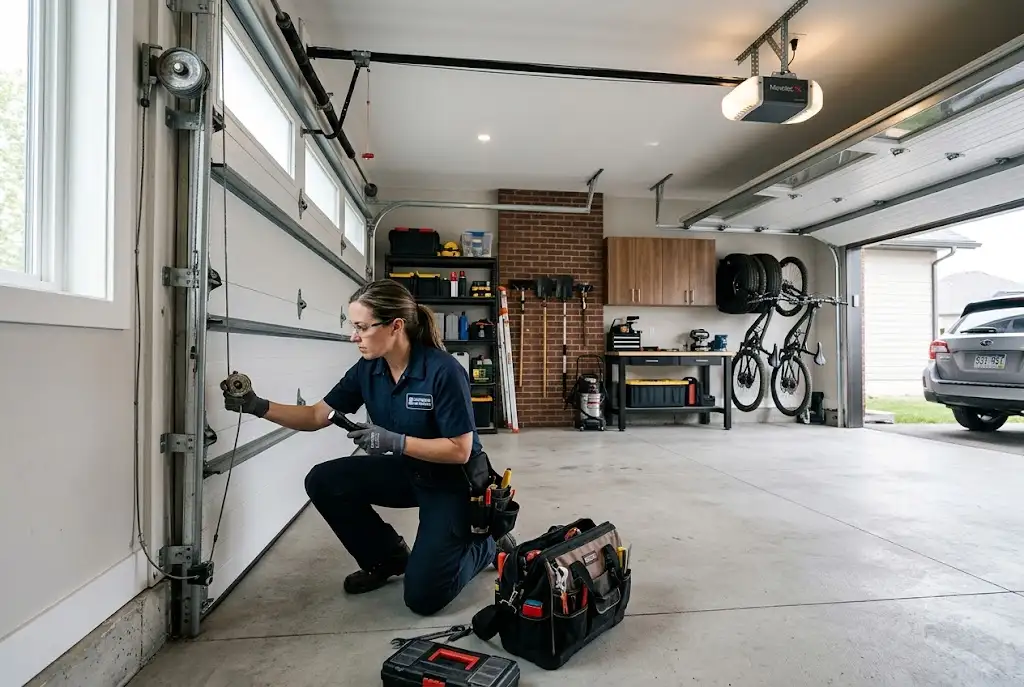
Learning how to repair garage door problems can help homeowners identify common issues early and determine whether a simple fix or professional repair is required. Garage doors are complex systems that rely on springs, cables, rollers, tracks, openers, and safety mechanisms working together. When one component fails, the entire system can be affected.
While some minor maintenance tasks can be performed safely by homeowners, certain repairs involve high-tension components that require professional expertise. Understanding the most common garage door problems and their causes can help prevent costly damage and improve long-term reliability.
This guide explains common garage door faults, troubleshooting techniques, and important safety considerations when addressing garage door repair issues.
Understanding How Garage Door Systems Work
Before attempting any repairs, it is helpful to understand the basic operation of a garage door system.
Most residential garage doors rely on:
- Springs
- Cables
- Rollers
- Tracks
- Hinges
- Garage door opener
- Safety sensors
- Control switches
These parts work together to lift and lower the door smoothly and safely.
Homeowners unfamiliar with these parts can review our guide on garage door components to better understand how the system operates.
Common Garage Door Problems
Garage Door Won’t Open
One of the most common complaints involves a garage door that refuses to open.
Possible causes include:
- Power supply issues
- Remote control problems
- Faulty wall switch
- Broken springs
- Damaged cables
- Opener malfunction
Checking the power source and opener settings is often the first troubleshooting step.
Garage Door Won’t Close
If the door opens normally but refuses to close, safety sensors may be blocked, dirty, or misaligned.
Modern garage doors use photo-eye sensors that stop the door when an obstruction is detected.
Garage Door Repair: How to Fix Noisy Operation
Unusual noises often indicate developing maintenance issues.
Common sounds include:
- Grinding
- Squeaking
- Rattling
- Popping
- Scraping
In many cases, proper lubrication and tightening of loose hardware can reduce operational noise.
If corrosion is contributing to the problem, homeowners may also benefit from reviewing our guide on garage door rust prevention and maintenance.
How to Repair Garage Door Track Problems
Garage door tracks guide the door during movement. Damaged or misaligned tracks can cause operational difficulties.
Signs of Track Problems
- Uneven movement
- Door sticking during operation
- Visible gaps
- Excessive vibration
- Unusual noises
Minor debris can sometimes be removed safely, but bent tracks often require professional repair or replacement.
Garage Door Repair How to Fix Roller Issues
Rollers help the door move smoothly along the track system.
Worn rollers may cause:
- Noisy operation
- Jerky movement
- Increased strain on the opener
- Track wear
Regular inspection and replacement of worn rollers can improve overall system performance.
Dealing With Broken Garage Door Cables
Cables are critical lifting components that operate under significant tension.
Warning signs of cable problems include:
- Visible fraying
- Loose cables
- Door imbalance
- Sudden operational failure
Because cable systems are closely connected to springs, repairs should be handled carefully. Homeowners experiencing cable-related problems can learn more through our guide on garage door cable replacement.
Garage Door Springs: A Major Safety Concern
Garage door springs store and release substantial amounts of energy during operation.
Signs of spring failure include:
- Door feels unusually heavy
- Door opens partially
- Loud snapping sounds
- Visible spring separation
Spring repairs are among the most dangerous garage door services and should typically be performed by trained professionals.
Garage Door Opener Troubleshooting
Not all garage door problems originate from mechanical components. Sometimes the opener system itself requires attention.
Remote Control Failure
Check batteries and signal range before assuming a larger issue exists.
Wall Switch Problems
Faulty wiring or switch failure can prevent proper operation.
Limit Switch Adjustment
An incorrectly adjusted limit switch may cause the door to stop prematurely or reverse unexpectedly.
Weather Seal Problems
Damaged weather seals can allow dust, moisture, pests, and outdoor air to enter the garage.
Signs of weather seal failure include:
- Visible gaps
- Water intrusion
- Excess dust accumulation
- Drafts around the door
Homeowners can improve protection and efficiency by installing or replacing a quality garage door weather seal.
Preventive Maintenance Reduces Repairs
One of the most effective ways to minimize repair costs is through regular maintenance.
Recommended maintenance tasks include:
- Inspecting cables and springs
- Lubricating moving parts
- Checking safety sensors
- Cleaning tracks
- Testing opener functions
- Inspecting weather seals
Routine inspections often identify problems before they develop into major repairs.
When Should You Call a Professional?
Although some minor troubleshooting tasks can be handled safely by homeowners, professional assistance is recommended when dealing with:
- Broken springs
- Damaged cables
- Track replacement
- Door imbalance
- Opener motor failures
- Structural damage
Experienced technicians have the tools and training necessary to complete repairs safely and efficiently.
Safety Tips Before Attempting Garage Door Repairs
Safety should always remain the highest priority.
- Disconnect power before inspection
- Keep hands clear of moving parts
- Never tamper with high-tension springs
- Use appropriate safety equipment
- Seek professional help when necessary
Following proper safety practices helps reduce the risk of injury and equipment damage.
Conclusion
Understanding how to repair garage door problems begins with identifying the underlying cause of the issue. From track alignment and roller wear to opener malfunctions and weather seal damage, many problems can be detected through routine inspections. However, repairs involving springs, cables, and other high-tension components should typically be left to professionals. With regular maintenance and timely repairs, homeowners can maximize the lifespan, safety, and reliability of their garage door systems.
For additional guidance regarding garage door safety, maintenance practices, and industry standards, homeowners can consult the Door & Access Systems Manufacturers Association (DASMA).
