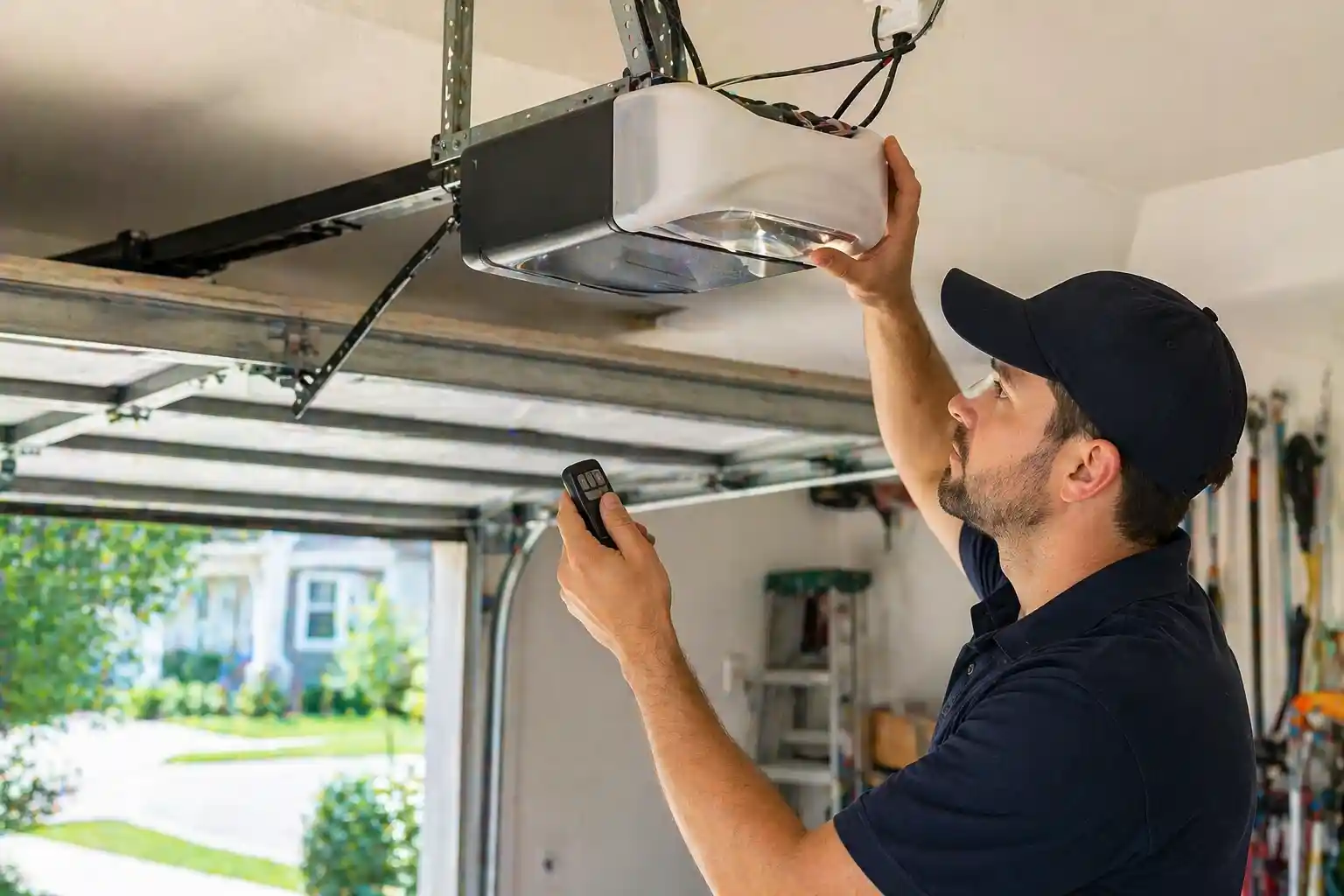
A garage door opener that suddenly stops working can be frustrating and inconvenient. Whether your remote is not responding or the door refuses to move, this issue can interrupt your daily routine and affect your home’s security.
The good news is that many garage door opener problems follow common patterns and can be identified quickly.
Common Signs of Opener Problems
If your garage door opener is not working properly, you may notice:
- Remote control not responding
- Wall switch not working
- Motor running but door not moving
- Door stops halfway
- Delayed or inconsistent response
1. Power Supply Issues
Sometimes the problem is as simple as a power failure. If the opener is not responding at all, check whether it is properly plugged in and receiving power.
You should also inspect the circuit breaker or fuse box to rule out electrical issues.
2. Remote Control Problems
If the wall switch works but the remote does not, the issue may be with the remote control itself. Weak batteries, signal interference, or programming issues are common causes.
Replacing the batteries or reprogramming the remote can often solve the problem.
3. Misaligned Safety Sensors
Garage doors rely on safety sensors to detect obstacles. If these sensors are blocked or misaligned, the opener may stop working as a safety precaution.
Check if the sensors are clean and facing each other correctly.
4. Worn or Damaged Motor Components
If you hear the motor running but the door does not move, there may be worn gears or internal damage inside the opener.
This usually requires professional repair or part replacement.
5. Broken Drive Mechanism
The drive system connects the motor to the garage door. If this component fails, the motor may run without actually moving the door.
This is a mechanical issue that needs proper inspection and repair.
6. Limit or Travel Settings Issue
Garage door openers use limit settings to control how far the door moves. If these settings are incorrect, the door may stop too early or fail to open completely.
Adjusting these settings can often fix the issue.
Simple Fixes You Can Try
Before calling a technician, you can try a few basic steps:
- Check power connection
- Replace remote batteries
- Clean and align sensors
- Reset the opener system
- Inspect for visible damage
If the problem continues, it’s best to avoid further troubleshooting and seek professional help.
When to Call a Professional
Some garage door opener issues involve electrical components or internal mechanisms that require specialized tools and experience.
If your opener is still not working after basic checks, a professional technician can diagnose the problem accurately and fix it safely.
Final Thoughts
A garage door opener not working is a common issue, but it should not be ignored. Early diagnosis and proper repair can prevent more serious problems and keep your system running smoothly.
Regular maintenance and timely inspections will help ensure your garage door opener continues to operate reliably for years to come.
Must Read Articles:
Broken Garage Door Spring? Here’s What You Should Know
Garage Door Off Track? Here’s What You Need to Know
Garage Door Making Noise? Here’s What It Means
Garage Door Not Opening? Here’s What Could Be Wrong
A Quick Word About Heat and Your Opener
Garages in the UAE get extremely hot in summer, and that heat works on the opener as well as on you. The motor unit’s capacitor and circuit board age faster in a hot, closed garage, and the backup battery fitted to many openers loses capacity sooner than the manual suggests. If your opener fails just after a power cut or during a heatwave, heat stress on the electronics is a likely suspect. Keeping some ventilation in the garage and mentioning the heat exposure to your technician helps them test the right parts first.
Test the Door Balance Before Blaming the Opener
One simple test separates opener faults from door faults. With the door closed, pull the red manual release cord and lift the door by hand to about waist height, then let go carefully. A well-balanced door stays roughly where you leave it; a door that slams down or shoots up has a spring problem, and the opener has probably been straining against that extra weight for months. In that case, read our guide to a broken garage door spring before running the opener again, because a strained opener often fails completely once a spring lets go.
Updated November 2026
A methodical check of power, sensors and door balance solves most opener callouts. For the sensor checks mentioned in this guide, our full article on garage door safety sensors goes deeper into alignment, cleaning and testing. If the door starts but will not close, our troubleshooting guide for a garage door that is not closing covers the next steps, and our preventive maintenance guide shows how a seasonal routine keeps opener faults rare.
