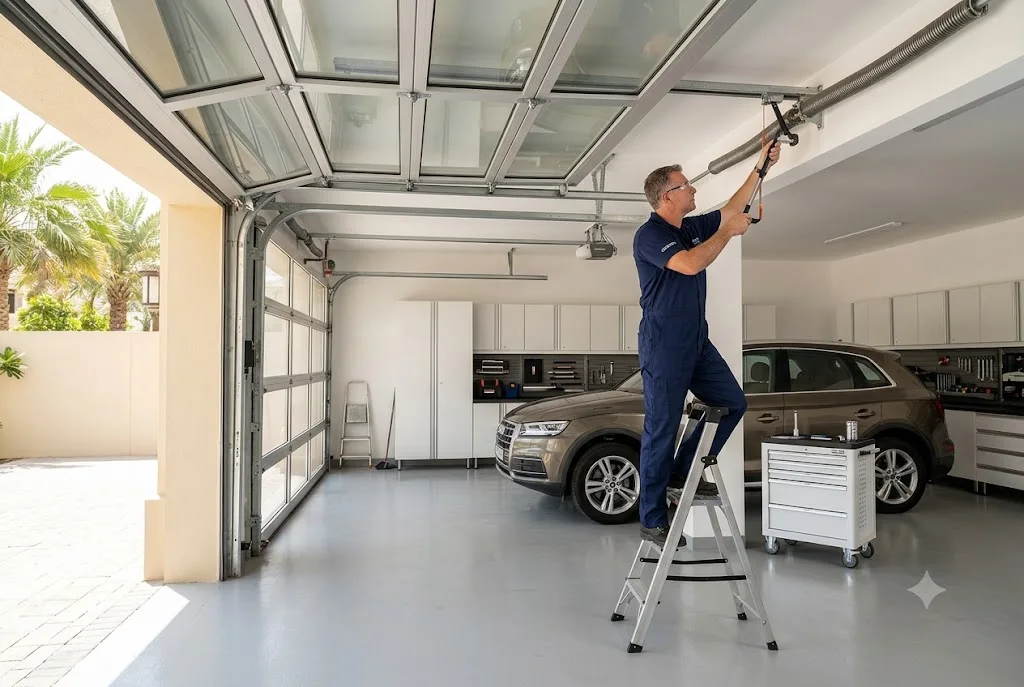
A garage door is the largest moving object in most homes. It provides safety for your vehicles. It secures an important entry point into your living space. In the UAE, these systems face extremely harsh conditions. The daily summer heat often rises above 50°C. Fine desert sand blows through the air constantly. Coastal cities like Dubai and Dubai Marina handle high atmospheric humidity. These severe elements place massive stress on mechanical assemblies. Routine garage door maintenance is not optional. It is completely necessary to prevent sudden system failures.
Neglecting your overhead door leads to serious issues. Small alignment problems turn into costly mechanical breakdowns. Heavy components wear down prematurely. A sudden failure can trap your vehicle inside the garage. This comprehensive guide outlines practical, step-by-step upkeep routines. It explains how to execute basic inspections safely. It also helps you identify when to book professional garage door servicing to keep your home accessible.
The Impact of the Desert Climate on Moving Hardware
Before diving into the steps, you must understand the local environment. Airborne sand is highly abrasive. It acts like fine sandpaper on moving parts. Sand mixes with heavy grease on tracks and rollers. This combination creates a thick, destructive paste. This grinding paste increases physical friction significantly. It forces the electrical systems to work twice as hard to lift the panel.
High temperatures also cause standard lubricants to thin out. Thin oil drips off the hardware quickly. This leaves vital steel bearings completely exposed to friction. Humidity causes bare metal surfaces to rust over time. Regular cleaning and correct lubrication counteract these environmental threats. It protects your financial investment and extends the lifetime of the hardware layout.
Step 1: The Monthly Visual and Audio Inspection
Good maintenance begins with simple observation. Stand inside your closed garage. Look closely at the entire structural framework. Examine the heavy lifting cables for visible signs of damage. Check for frayed metal strands or rust spots near the bottom brackets. Inspect the tracking rails for dents, bends, or loose mounting bolts. Look at the small steel or nylon rollers. They should sit squarely inside the tracks without excessive wobbling.
Next, operate the door using your standard garage door remote transmitter. Listen carefully to the sounds of the mechanism. A healthy system runs smoothly with a steady, predictable hum. Listen for sudden grinding noises, loud scraping sounds, or rhythmic clicking. These strange noises indicate physical friction or worn internal bearings. Early detection allows you to address minor structural issues before they ruin your core electrical components.
Step 2: Cleaning and Lubricating Moving Components
Clean surfaces are essential before applying fresh lubricant. Use a clean, dry microfiber cloth to wipe down the inside of the tracking rails. Remove all accumulated dust, dark grease buildup, and trapped sand particles. Do not apply heavy grease directly inside the tracks. Thick grease traps airborne sand instantly, which makes the problem worse. The tracking tracks should remain completely clean and dry.
Focus your lubrication efforts entirely on the moving pivot points. Use a high-quality silicone spray or a dedicated lithium grease. Spray the small steel rollers, the heavy hinges, the bearing plates, and the overhead metal springs. Slide the lubricant deep into the moving joints. Wipe away any excess oil drops with a clean rag. Regular lubrication keeps the entire structure running quietly. It prevents metal-on-metal friction and protects the main garage door motor from overheating during operation.
Step 3: Checking the Structural Balance of the Door
An unbalanced overhead door is highly dangerous. It ruins your lifting machinery very quickly. The heavy lifting work should be handled by the high-tension springs, not the electrical unit. To test the balance, you must decouple the door from the electric rail. Pull the red emergency release cord down firmly. This allows you to operate the panel by hand.
Lift the heavy door halfway up along its tracks and let go of the handle carefully. A perfectly balanced door will stay stationary at the midpoint. It should hover in place using the counterweight tension of the springs. If the door slides down rapidly, the spring tension is too weak. If the door flies upward violently, the spring tension is far too strong. Do not attempt to adjust these high-tension springs yourself. They hold immense mechanical energy and can cause severe physical injury. Book professional care immediately if your balance test fails.
Step 4: Testing Essential Safety Mechanisms
Modern entry systems feature built-in safety networks to protect your family. These features must be tested regularly to ensure they respond instantly during emergencies. Start by testing the infrared electronic safety sensors. These small electronic eyes sit at the base of the tracks near the floor. Open the door fully, then command it to close. Wave a long wooden broom handle through the invisible beam path. The door must stop moving instantly and reverse its travel path back to the open position.
Next, test the mechanical auto-reverse system. Place a solid piece of wood flat on the ground directly beneath the center of the opening. Press your wall button to close the door. The bottom edge of the panel must strike the wood block firmly. The internal logic board should detect the physical resistance immediately. The system must reverse and travel back upward within a split second. If the door hits the block and keeps pushing downward, the internal forces are misconfigured. Refer to a trusted how to program a garage door opener framework to recalibrate these electronic force settings safely.
When to Search for Garage Door Maintenance Near Me
Homeowners can easily handle simple tasks like cleaning, surface lubrication, and safety testing. However, complex mechanical components demand advanced tools and professional expertise. Major alignment issues require specialized training to correct safely. High-tension torsion springs require dedicated winding bars to adjust without risking sudden failure.
If your system repeatedly suffers from a malfunctioning garage door not closing properly, the tracking may be bent out of shape. Alternatively, internal components might be failing. Specialized setups like an ATA garage door opener contain advanced electronic safety chips. These components require certified diagnostic readers to troubleshoot correctly. Sourcing local experts ensures that replacements match original manufacturing standards. This precision keeps your home defense framework completely secure.
To learn more about standard industry safety rules and physical installation guidelines, you can visit the official educational resources provided by the Door and Access Systems Manufacturers Association. Following verified global protocols prevents common installation errors. It ensures your automated garage door opener functions safely for many years.
Make sure to incorporate these access checks into your comprehensive home improvement schedule. Taking ten minutes each month to clean your tracks, lubricate your bearings, and test your safety eyes prevents major inconveniences. This small investment of time keeps your entry automated, reliable, and perfectly prepared for the harsh summer weather.
Conclusion
Preventive maintenance saves money, protects your vehicles, and guarantees continuous home accessibility. Clean out abrasive desert sand regularly. Apply proper silicone lubricants to moving hinges and rollers. Test the safety reversal networks every single month. When complex alignment or spring tension challenges surface, contact certified local professionals for assistance. Taking good care of your mechanical entry framework ensures a safe, quiet, and reliable garage door through every season.
